
Tabla de contenidos
- What exactly does ChatGPT’s designation as a VLOSE mean?
- Search Engine, Not a Platform: Why It Matters So Much
- The DSA’s Obligations, Explained for Brands
- Report or Speak Out: The Clash with Google’s Trial in Munich
- Implications for organic discoverability on AI platforms
- What actions can we take right now…
- …and what won’t change
- The Unknowns of the DMA
- Frequently Asked Questions
On August 31, the European Commission designated ChatGPT as a Very Large Online Search Engine (VLOSE) under the Digital Services Act (DSA), the same legal category that until now had included only Google Search and Bing. One number justifies this designation: approximately 159 million users use ChatGPT as a search engine in the European Union each month. This is more than triple the threshold of 45 million monthly users required to qualify for this status. For the first time, a top-tier regulator has formally equated an AI assistant like ChatGPT with a traditional search engine like Google or Bing, with direct consequences for any business that relies on organic findability in Europe. Let’s take a look at what they are.
What exactly does ChatGPT’s designation as a VLOSE mean?
The European Commission announced three new designations under the DSA that day. The one we’ve already mentioned—ChatGPT as a very large search engine (VLOSE)—and the designations of the online forums Reddit and Roblox as very large online platforms (VLOPs). With these three designations, 28 companies are now regulated under the DSA, including other giants such as AliExpress, Amazon, Apple, Booking, Meta, LinkedIn, TikTok, and Zalando.
All must exceed the same threshold of 45 million average monthly users in the European Union, meaning they affect at least one in ten EU residents. The user figures come from the companies themselves: OpenAI reported more than 159 million monthly active users of ChatGPT’s search feature over a six-month period, as of March 31. Reddit reported a peak of 57 million, and Roblox, more than 46 million.
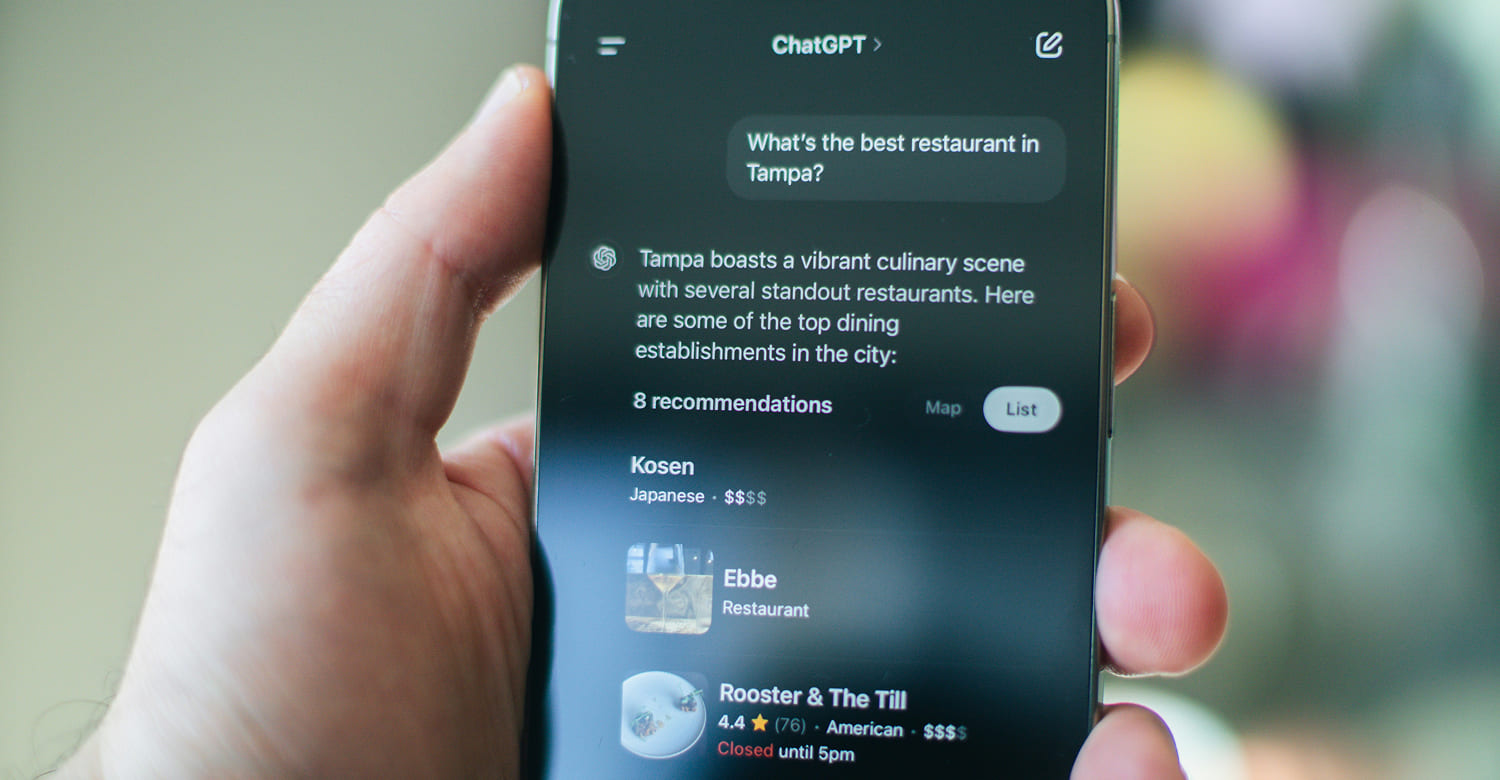
The European Commission classified ChatGPT as a “hybrid service” that meets the definition of a search engine because it responds to user queries by frequently searching the web. Based on this classification, the Commission, in collaboration with Ireland’s Coimisiún na Meán and the Dutch ACM, will oversee these three platforms. This means they will be subject to a higher standard of scrutiny and accountability, given the enormous impact they can have on European citizens and society at large.
This designation is not a sanction, nor does it imply any suspicion of infringement; rather, it acknowledges that the scale these platforms have reached requires them to comply with additional obligations proportional to their responsibility.
Search Engine, Not a Platform: Why It Matters So Much
The Digital Services Act (DSA) was adopted in 2022, even before generative AI became widespread, so it did not include a specific classification for services like ChatGPT. After an intense debate over whether it is a search engine (like Google Search or Bing) or a platform (like Reddit or Roblox), the Commission ultimately leaned toward the former. From this perspective, the Commission views ChatGPT as a system that answers user queries by searching the web. For regulatory purposes, this makes it an intermediary that does not generate its own content but instead organises third-party information.
From the standpoint of a company’s online reputation, this criterion has more implications than one might initially suspect. Platforms that serve third-party content (such as social media and marketplaces) are subject to the “notice-and-takedown” regime under Article 16 of the DSA, which requires them to provide mechanisms to report and remove specific illegal content.
While platforms must comply, search engines are not. For a brand whose online reputation is threatened by a generative response, the process for removing that information from ChatGPT offers fewer options than it would on a social media platform: the DSA requires complaint and transparency channels but does not require a “remove this response” button.
Despite this nuance, designation as a VLOSE does trigger the full set of obligations reserved for the largest services, and it is here that brands find, for the first time, formal levers: transparency, an identifiable point of contact, and a reporting mechanism for overtly illegal content.
The DSA’s Obligations, Explained for Brands
- Systemic Risk Assessment and Mitigation. ChatGPT will be required to identify and reduce risks associated with the service and its algorithmic systems, including illegal content, effects on minors, physical and mental well-being, fundamental rights, electoral processes, and public safety. This will likely lead ChatGPT to be more stringent in selecting sources on sensitive topics (in line with Google’s E-E-A-T guidelines) and to place greater emphasis on official, verifiable sources.
- Annual Independent Audit. ChatGPT must undergo an external audit and respond to the auditor’s requests and recommendations. This will increase pressure to ensure the accuracy, timeliness, and truthfulness of responses. The results of these audits will provide insights into how OpenAI manages information risk.
- Data access for regulators and researchers (Article 40). ChatGPT will be required to share data with the Commission and national authorities, as well as to grant access to accredited researchers to analyze potential systemic risks, such as the dissemination of illegal content, interference in electoral processes, the spread of fake news or deepfakes, or addictive usage mechanisms. This will enable independent academic analysis of aspects such as source selection, response biases, brand visibility, and criteria for mentions and linking.
- Recommendation option without user profiling. Users must have access to a response mode that is not based on user profiles. This aspect validates the model for measuring visibility on AI platforms using neutral profiles—a method we implement with Netmetriks at Human Level and which is also applied by other commercial prompt-tracking tools.
- Maintain a public repository of advertisements. ChatGPT will be required to maintain a public archive of advertisements from all companies, which will facilitate analysis of which brands pay to appear in generative responses and with what messages.
- Point of Contact and Transparency Reports. ChatGPT must designate a point of contact and publish periodic reports on its activity; in other words, companies will have an identifiable point of contact and a regulator to which they can file complaints. In this case, the Irish Media Commission.
Report or Speak Out: The Clash with Google’s Trial in Munich
Brussels’ decision comes close in time to another legal interpretation of the same phenomenon. Earlier this year, the Munich Regional Court ruled, in a preliminary injunction, that what Google’s AI states in its AI Overviews is Google’s own content and not a link to third-party content—especially since none of the cited sources supported the statement in question.
Thus, two opposing rationales apply to the same fact. By designating it as a VLOSE, the Commission considers the AI that searches the web to be an intermediary that points out third-party information; for the German court, however, the AI that speaks in the first person is the author of the response it returns and, therefore, responsible for its accuracy and truthfulness. European law has not yet decided which approach prevails, and that decision determines something critical for online reputation management: who is liable when an AI assistant makes a false or illegal statement about a brand.
We recently explored this contradiction in the editorial of our newsletter Encontrables (only in Spanish).

Implications for organic discoverability on AI platforms
Institutional legitimacy
The designation of ChatGPT as a major search engine settles once and for all the debate over whether a query on AI platforms constitutes “search.” For the Commission, there is no doubt, and this makes discoverability in AI environments a key area for investment with a very clear justification that is no longer open to debate: 159 million European users turn to ChatGPT every month to search.
Regulated sectors and the source of truth
Regulated sectors such as finance, energy, healthcare, and insurance are precisely the areas where OpenAI will have to demonstrate effective risk mitigation to its auditors and the supervisory authority in the strictest terms. This suggests we will likely see a more conservative European version of ChatGPT that relies more heavily on official sources for particularly sensitive topics (remember how Google SGE initially resisted responding to YMYL searches?). On the other hand, the corporate domain is gaining prominence as a reliable source for verifying AI models’ accuracy, rather than triangulating data from third-party sites.
Formal complaint channel
Until now, when an AI assistant made a false or harmful statement about a company, there was no point of contact. As a VLOSE, OpenAI must maintain a point of contact, publish transparency reports, and respond to a national coordinator. This is not, in itself, a channel for correcting responses, but it is at least a legal avenue for reporting illegal content (for example, defamation, impersonation, or fraud). Managing algorithmic reputation thus becomes a joint effort involving legal, communications, and SEO/GEO teams.
A common basis for measurement
The requirement to offer, where applicable, a recommendation option without profiling creates, for the first time, a neutral benchmark against which to measure a brand’s visibility on the AI platform, separating what the model “knows” based on its training data or the sources it consults on the web from what it personalizes for each user according to their usage history, the context to which they have been granted access, and the stored data. If we are to take this aspect into account, monitoring tools should immediately segment data by geography (results available in the EU on one hand, and in the rest of the world on the other) and, where applicable, with or without user profiling.
Ripple effect
It is entirely foreseeable that the same criteria used to classify ChatGPT will apply to Gemini, Copilot, Perplexity, or Claude as soon as they exceed the 45 million monthly European-user threshold. Under this criterion, the category of “AI assistant with search” is regulated as search, which reinforces the argument that traditional organic visibility and AI visibility constitute the same competitive landscape.
What actions can we take right now…
For a marketing department, defining ChatGPT as a major search engine clarifies and confirms key concepts for senior management and finance. 159 million users in Europe use ChatGPT monthly to find companies, products, and services. This potential audience is indisputably important. Discoverability on AI platforms must be a top priority, with specific investment and a methodology for measuring visibility and estimating ROI.
In the legal and communications spheres, companies must define a protocol for building and monitoring their algorithmic reputation: who identifies problematic, false, inaccurate, or outdated responses and how; who determines whether we are dealing with a mere inaccuracy or something outright illegal; who files a complaint (we must identify OpenAI’s DSA point of contact), through which channel; and what role the Coimisiún na Meán will play as the supervisory authority.
For the SEO/GEO, technical, and content teams, work on the corporate website as the source of truth will become even more important: pages accessible to crawlers with up-to-date and accurate data, structured data, consistent information across different versions, and the dissemination of consistent, aligned information through Communications and digital PR initiatives.
And one final action we cannot delay, because it has a deadline: establishing the starting point now. As we’ve explained, ChatGPT has until January 2027 to implement the DSA’s requirements, and the European version we’ll use from then on will likely differ from the current one: more conservative on sensitive topics, with a mode that does not profile users, and—almost certainly—with advertising. If we start measuring our brand’s visibility today, we’ll have a baseline against which to assess how these changes unfold. If we wait until February, we won’t be able to reconstruct the “before” scenario, since that data isn’t archived anywhere. So we’d better take advantage of the window of opportunity over the next four months.
…and what won’t change
The designation does not change how ChatGPT decides which domains to mention or link to in its responses, nor does it require it to explain how it ranks results to SEOs, GEOs, or other marketing professionals. In principle, the DSA’s transparency requirement will only enable regulators and accredited researchers to conduct analyses and studies, the impact of which on the sector will be felt only in the long term. For now, the work that SEO/GEO consulting firms like Human Level do to improve our clients’ visibility does not appear to be affected by this issue.
The Unknowns of the DMA
A potential designation of OpenAI as a “gatekeeper” (a category that already includes Google, Apple, Meta, Amazon, Microsoft, and Booking) would raise the bar even higher, bringing it in line with the Digital Markets Act (DMA) requirements. The rationale is clear: more than 90% of internet searches go through Google, so whoever controls the gateway effectively decides who is visible. The DMA exists precisely to prevent those who control access from gaining an unfair competitive advantage within that ecosystem.
Among its obligations is a ban on self-preferencing: in other words, OpenAI could not favour its own services or those of its partners in rankings over third parties and would be required to apply transparent, fair, and non-discriminatory ranking criteria. For example, it could not systematically prioritise its own checkout process (checkout), its business partners, or its products in its search results and recommendations, as this would expose it to a penalty. This is the same reason why Brussels has just fined Google under the DMA: 460 million for prioritising its own services in the search engine, as part of a total fine of 890 million euros.
It would also be required to provide access to its search query and click data (as Google has already been required to do) under fair conditions. Take note! This would indeed represent a massive change, as it would have to grant access to its conversational search query data, making the analysis of search intent—albeit indirectly—much more accessible than it is now.
It could not combine personal data (user profiling) across different services without users’ explicit consent and with full transparency about the pricing data shared with advertisers.
All of this points to a more fundamental principle, foreshadowing how Brussels will act with regard to other AI assistants: the DMA’s goal is not so much to impose fines as to correct the market before competition disappears. It’s the same scenario now unfolding in conversational search: a handful of already established assistants are becoming the default gateway to knowledge—and, soon, to e-commerce as well. If the Google case serves as a precedent, this time the regulator won’t wait 20 years to act.
One final aspect affects us more directly: Article 40 grants accredited researchers access to data. Independent research into how AI assistants select and cite sources will be one of the most interesting areas of work in SEO/GEO in the coming years, and Human Level is already participating in academic research on potential biases in the discoverability of geoTLDs as part of this Accent Obert project, which is funded by ICANN. This puts us in a prime position to gain firsthand insight into how these systems decide to mention or link to certain sources over others.

Frequently Asked Questions
Is ChatGPT considered a search engine by the EU? Yes, for the purposes of the DSA. The European Commission designated it on August 31, 2026, as a Very Large Online Search Engine, as it is a “hybrid service” that responds to user queries, including web searches.
What is a VLOSE? A Very Large Online Search Engine: that is, a large search engine with at least 45 million average monthly users in the EU, subject to the DSA’s strictest obligations. Before ChatGPT, only Google Search and Bing held this designation.
How many users does ChatGPT have in Europe? According to OpenAI’s DSA declaration, ChatGPT’s search feature reached an average of approximately 159.1 million monthly active users in the EU during the six-month period ending March 31, 2026. This figure refers specifically to ChatGPT search, not to the ChatGPT service as a whole.
When does compliance begin? ChatGPT has four months from the notification of the designation; according to the Commission’s official statement, the deadline expires in January 2027.
Does this affect Gemini, Copilot, or Perplexity? Not yet, but it sets a precedent: any assistant with a search function that exceeds 45 million monthly users in the EU may receive the same designation, and the Commission has already announced it will do so.
Can a company file a complaint against ChatGPT for false information? The DSA requires OpenAI to maintain a point of contact and establishes complaint channels through the national coordinator (the Irish Media Commission) for illegal content. However, there is no mechanism to correct merely inaccurate responses; for that, the approach remains to influence the sources the assistant consults and cites.
Does this change SEO/GEO? No, this does not change how ChatGPT selects sources or ranks its results. It changes the framework: the regulator treats visibility in AI assistants similarly to visibility in search results, confirming organic findability as a single discipline across traditional search engines and AI environments—regardless of whether you call it SEO, GEO, or something else.