Tabla de contenidos
- Spanish SEO consultancy will serve as the technical partner for a global research project led by Accent Obert
- An analysis of the impact of geo-territorial domains on traditional search engines and AI platforms
Human Level, a leading international consultancy in online positioning and findability, will develop pioneering research on the visibility of geoTLDs (geographic Top-Level Domains) in both traditional and AI-powered search engines.
The project, funded by the Internet Corporation for Assigned Names and Numbers (ICANN) grant program and led by Fundació .cat (now Accent Obert), was one of 19 selected from over 247 proposals submitted worldwide.
ICANN is a non-profit organization that coordinates IP addresses and domain names globally. Its mission is to ensure a stable, unified, and secure Internet system, managing the allocation of these identifiers so that all users can browse without issues.
An Unprecedented Study in the Industry
The research, titled Evaluating GeoTLD Performance to Improve Internet Accessibility: An Open-Source Methodological Approach, aims to determine if the eleven geo-territorial and cultural domains participating in the study (.cat, .barcelona, .eus, .gal, .bzh, .cologne, .koeln, .london, .quebec, .scot, and .wien) could see their visibility affected compared to generic domains like .com or each country’s respective ccTLD.
“This project represents a milestone in the SEO sector and a validation of the methodology we designed three years ago for an initial analysis of the .cat domain,” says Fernando Maciá, CEO of Human Level. “For the first time, we will be able to measure with scientific rigor and under controlled laboratory conditions whether the choice of geoTLD domains affects their visibility in traditional search engines and AI platforms. Our 20 years of SEO experience make us the ideal technological partner for this research.”
Innovative Methodology and Open Source
Human Level will be responsible for designing and executing an innovative methodology that will include:
- Registration of experimental domains: Creating multiple domains with different extensions (geoTLDs and generic) to ensure a level playing field.
- Rigorous control of relevance factors: Neutralizing aspects such as domain age, authority, external links, server geolocation, CMS used, and other technical factors.
- Multilingual and geographic analysis: Measurements from different locations and in several languages to evaluate search engine behavior based on linguistic and geographic context.
- Evaluation on AI platforms: A pioneering study on how new AI-powered search tools (such as ChatGPT, Perplexity, or Mistral) treat these domains.
“What makes this study unique is its scientific approach and its commitment to transparency,” explains Maciá. “The entire methodology will be open source, allowing any organization to replicate or adapt it. This democratizes access to knowledge and contributes to a fairer and more inclusive Internet.”
Implications for the Future of the Internet
The project has direct implications for:
- Linguistic and cultural communities: It will help determine if adopting domains representing the cultural or geographic identity of certain groups negatively affects their online visibility.
- ICANN’s next round of new gTLDs: It will provide evidence-based data to establish best practices.
- Universal Acceptance: It will serve to advocate that all domains, regardless of their extension, be treated equitably by search engines and AI platforms.
- AI-driven search engines: It will be able to detect the existence of possible biases in new search platforms.
“At Human Level, we see this project as a fundamental contribution to a more diverse and representative digital ecosystem,” adds Maciá. “Cultural and linguistic diversity is an essential strength of the Internet, and our work will help ensure that no community is penalized for choosing the domain that best represents its identity.”
A Project with Global Reach
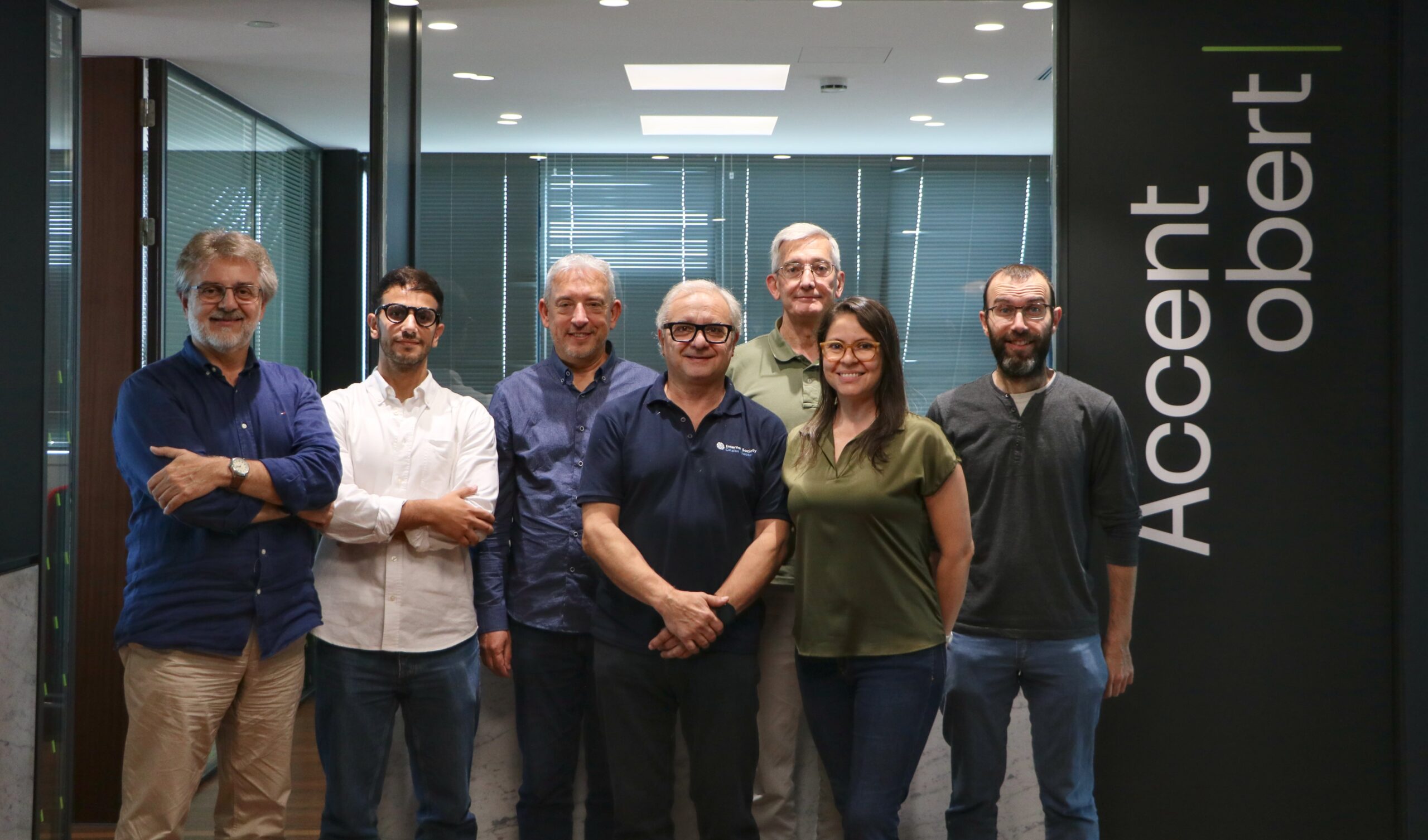
The study, with a budget of approximately $350,000 and an estimated duration of two years, involves the participation of 11 geographic domains and the support of organizations such as the geoTLD Group and ISOC-CAT (Internet Society – Catalan Chapter).
Human Level will contribute its extensive experience to the project in:
- Designing and executing large-scale SEO experiments.
- Analyzing search engine algorithms.
- Working with large corporations and international projects.
- SEO training and outreach (its teaching activity, publication of technical articles, and more than twelve books).
The study’s results will be published openly and presented at major industry forums, including ICANN meetings and specialized conferences on SEO and Internet governance.
Accent Obert, as the project lead, will spearhead the dissemination of the study, which will be presented in 10 languages.
About Fundació .cat / Accent Obert
Accent Obert (formerly Fundació .cat) has been the management organization for the .cat domain since 2005, the first domain to open doors for cultural and linguistic communities on the Internet. Its mission is to promote the presence of Catalan in the digital sphere, defend digital rights, and contribute to a fairer, more open, and accessible Internet.
About ICANN
ICANN (Internet Corporation for Assigned Names and Numbers) is a public-benefit non-profit corporation established in 1998, whose mission is to ensure a stable, secure, and unified global Internet by coordinating the allocation and management of IP addresses, domain names, and protocol parameters.