Tabla de contenidos
In Barcelona, we presented the methodology used to measure whether a domain extension influences its visibility on Google and AI platforms.
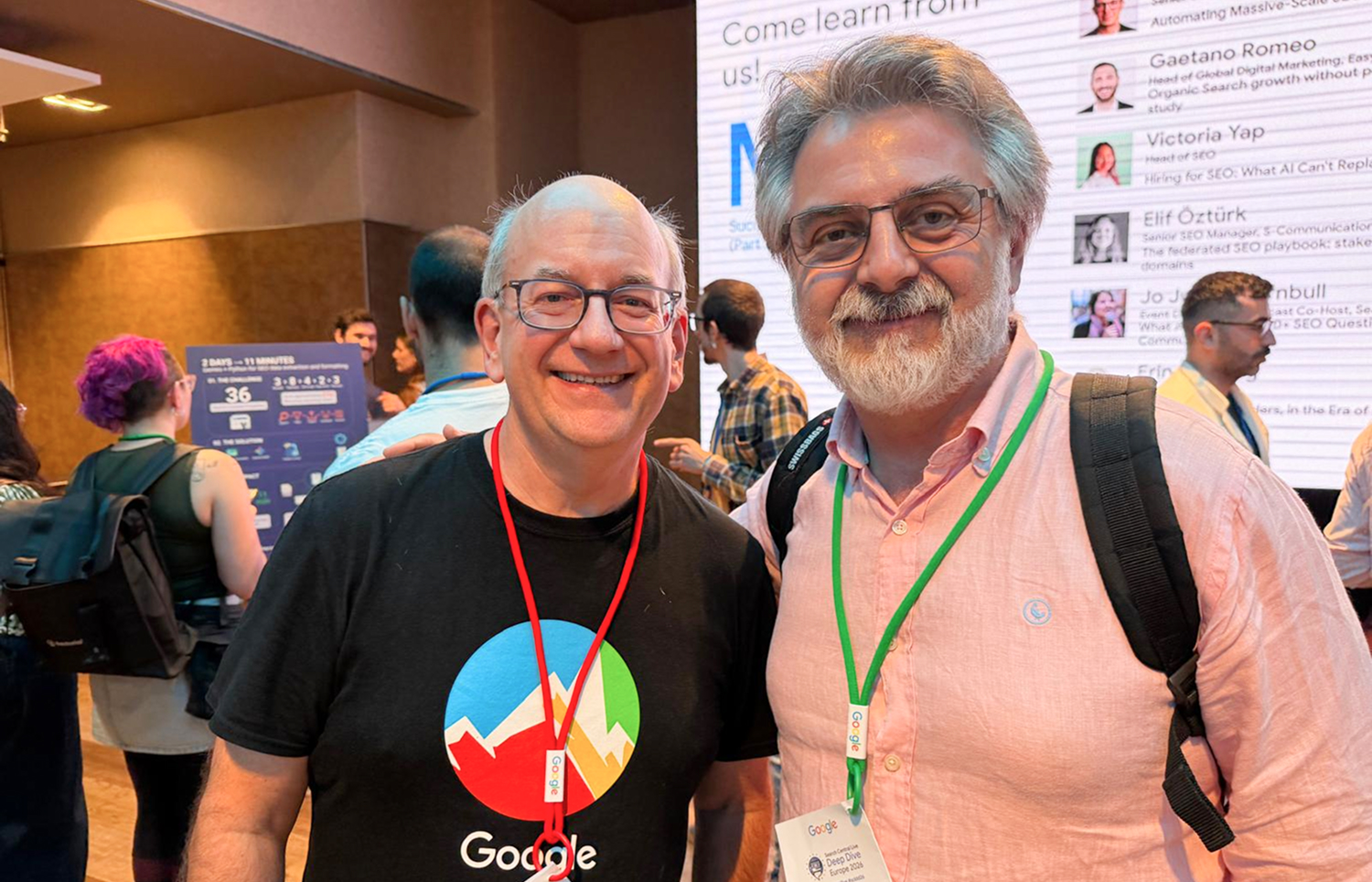
Our director, Fernando Maciá, attended from September 30 to October 2 the Search Central Live Deep Dive Europe 2026, the technical gathering held by Google’s Search Central team in Barcelona. It was the first European edition of the Deep Dive format, which Google designs as a classroom-style study itinerary intended to teach the search engine’s mechanics and how to apply them to daily work. The three days formed a narrative thread following a page’s journey through Google: the first was dedicated to crawling, the second to indexing, and the third to serving results, ranking, and AI features.
The welcome was given by Lino Cattaruzzi, President of Google Iberia. The bulk of the sessions were led by Gary Illyes, John Mueller, and Cherry Prommawin from the Search Relations team. They were joined by other Google speakers such as Erin Sparling, Ryan Levering, Duy Nguyen, and Pablo Pérez. Community speakers included Carlos Ortega Roldán, Lino Uruñuela, David Carrasco, Juan Seguí, Noe Rivas, James Powley, Irene Cecotti, and Eduard Blacquière.
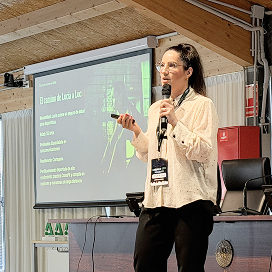
The program combined two participation formats. On one hand, the Lightning Sessions, held in the main auditorium and lasting seven minutes each. On the other, the Poster Sessions, in which Fernando participated: each speaker presented their work on a poster in the hall, and attendees could approach to learn more about the project and ask their questions.
Is it possible to isolate a single ranking factor?
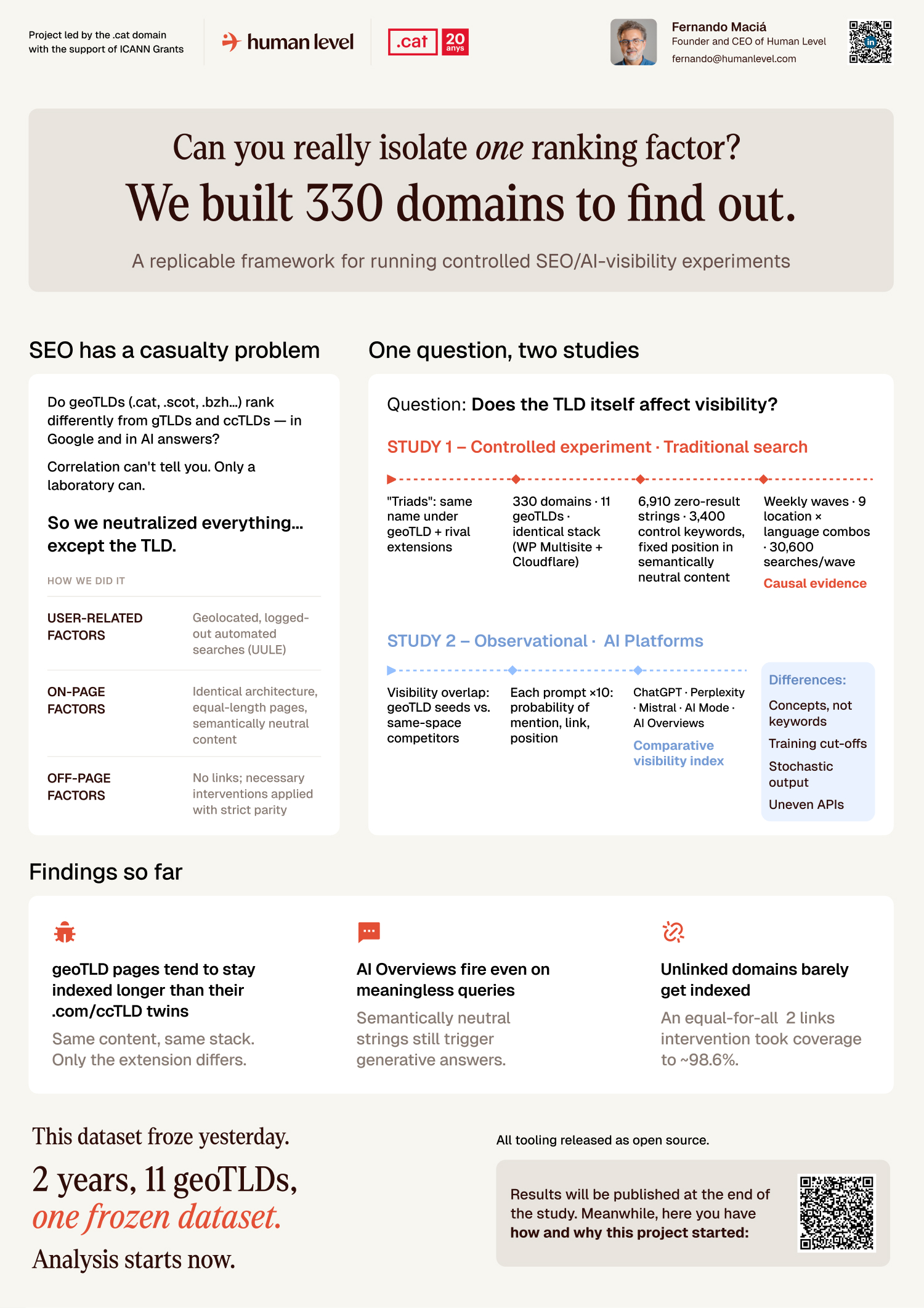
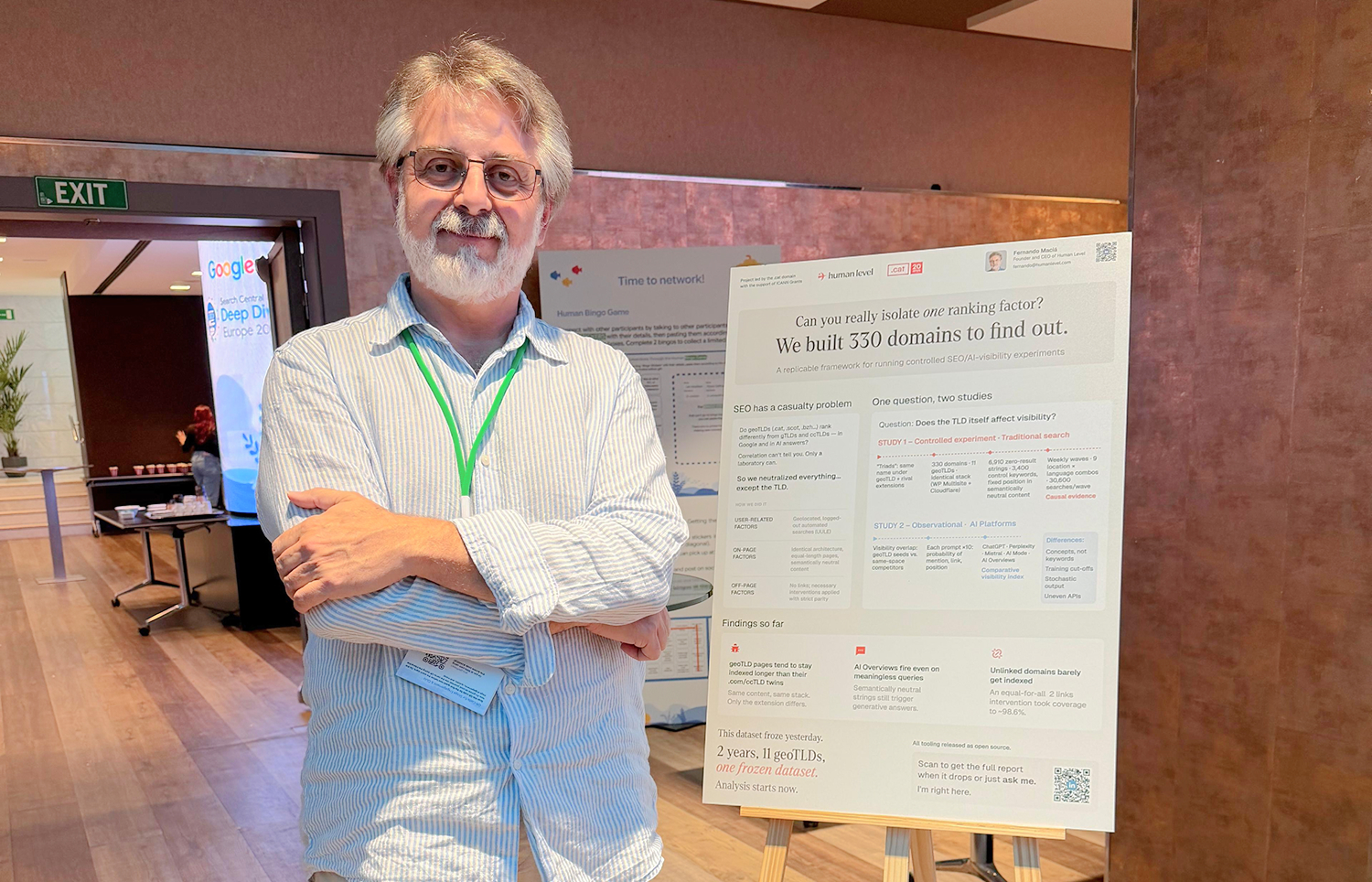
On October 1st, as part of the indexation track, Fernando presented the poster “A replicable framework for running controlled SEO/AI-visibility experiments”. The title summarizes the purpose of the work: to offer a replicable framework for conducting controlled SEO and AI visibility experiments. This is the methodology we developed for the international study on the visibility of geoTLD domains led by Accent Obert, funded by the ICANN grant program, and featured in the newspaper Información.
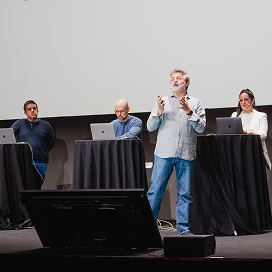
During the session, held in the hall, attendees were able to talk with Fernando and ask him questions about the experiment.
A causality problem
The study aims to determine if geographic and cultural domains (.cat, .barcelona, .eus, .gal, .bzh, .cologne, .koeln, .london, .quebec, .scot, and .wien) see their visibility affected compared to generic ones like .com or their country-code domain, both in Google and in AI responses.
Correlation studies cannot answer that question because dozens of factors influence any real website simultaneously. To know if the extension has its own effect, a laboratory was needed—an aseptic environment that neutralized all variables except for the top-level domain (TLD).
How everything else was neutralized
- User factors: automated, geolocated searches without being logged in, using the UULE parameter.
- On-page factors: same architecture, pages of equal length, and semantically neutral content.
- Off-page factors: no links and, when intervention was necessary, the same intervention for all domains.
Two studies for the same question
Study 1: Controlled experiment in traditional search. The team built domain “triads”: the same name registered with a geographic extension and with rival extensions. In total, 330 domains for 11 geoTLDs, all set up on the same infrastructure (WordPress Multisite and Cloudflare). Within their content, 6,910 strings were inserted that returned no results in Google for the domain and page names, along with 3,400 control keywords, always in the same position within semantically neutral texts. Each week, a wave of 30,600 searches was launched across 9 combinations of location and language. As a controlled experiment, it allows us to speak of causal evidence.
Study 2: Observational study on AI platforms. It compares the visibility of geographic domains with that of competitors in the same semantic field on ChatGPT, Perplexity, Mistral, AI Mode, and AI Overviews. Each prompt is launched 10 times to calculate the probability of the domain being mentioned or linked and in what position. With this data, a comparative visibility index is built. This second study cannot replicate the design of the first because models work with concepts rather than keywords, have training cutoff dates, provide responses that vary between runs, and offer very inconsistent APIs.
Initial study findings
The final results will be published at the end of the study, but the poster shared some early observations. Two of them relate to indexation, the central theme of the day:
- Pages with geographic extensions tend to remain indexed longer than their .com or country-code twins with the same content and infrastructure.
- Domains without links are barely indexed. An intervention of two links, identical for all, raised coverage to nearly 98.6%.
- AI Overviews are triggered even by nonsensical queries: semantically neutral strings also generated generative responses.
This is one of the observations that interests us most, as it confirms under laboratory conditions what we see in new projects: without external links, Google takes a long time to incorporate them into its index, if it ever does.
Two years of data ready for analysis
The dataset, the result of two years of work with 11 geographic extensions, was frozen on September 30, 2026, and the analysis phase is now beginning. All tools developed for the project will be made available to the community as open source, so that any team can apply the same method to other factors. The results will be published openly and presented at ICANN meetings and specialized SEO and Internet governance conferences.
At Human Level, we have been working in SEO for over 25 years, and this study is one of the most ambitious we have designed. If you are considering which extension to use for your project or want to know how Google and AI represent you, we can help with an SEO/GEO audit.
If you want to know how and why this project was born, you can read the Accent Obert announcement.