
Tabla de contenidos
As we approach March 2026, the “SEO is dead” narrative has once again collided with the reality of data. Following two years of mass adoption of Large Language Models (LLMs) and the deployment of solutions like ChatGPT Search, the landscape for large corporations is clearer today than ever: while AI generates conversation, Google continues to generate business.
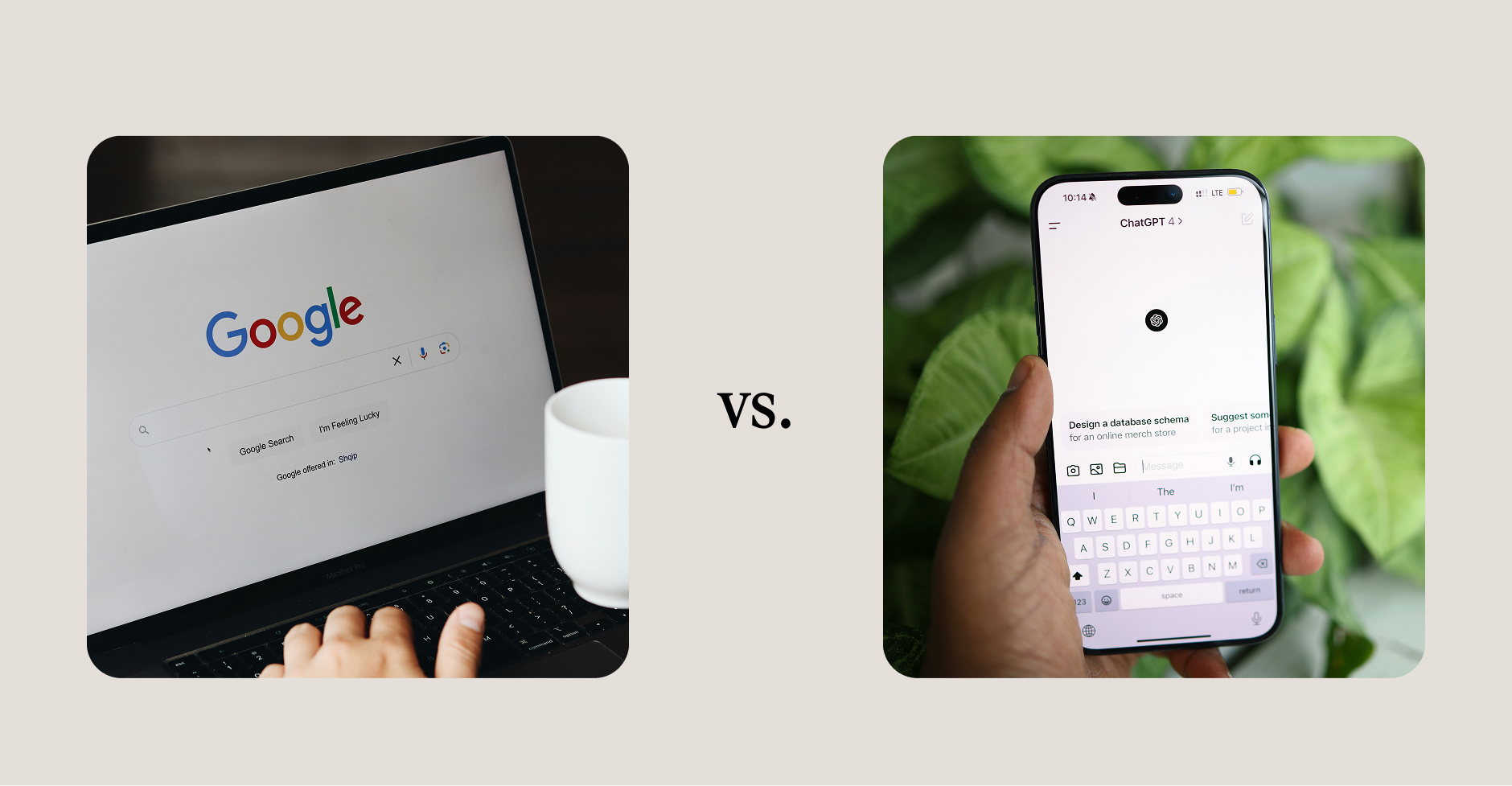
A recent analysis by Ahrefs sheds light on this paradox: ChatGPT already processes a query volume equivalent to 12% of Google searches. This is historic growth for such a young platform, but it holds a critical metric for any Marketing Director: Google sends 190 times more qualified traffic to websites than ChatGPT.
How is it possible that, with such significant usage volume, the impact of LLMs on customer acquisition remains residual? We analyze the strategic factors and movements defining visibility in this new cycle.
The conversion gap: from synthesis to purchase decision
The fundamental difference between both ecosystems lies not in the technology, but in user intent. While Google maintains an average click-through rate (CTR) of 29.2%, ChatGPT’s sits at a mere 1.3%.
- On Google, users seek an external solution: search is a means to reach a destination—a product, an expert service, or detailed information to support a decision. There is a willingness to “exit” toward a trusted website.
- On LLMs, users seek a final answer: according to this OpenAI report, some of the primary ways users engage with the platform include content drafting and seeking information for decision-making. The user enters an internal production flow where clicking away is perceived as an interruption rather than the objective.
For a company with a complex digital ecosystem, this means that Google traffic remains the primary engine for transactions and high-value lead generation.
The “retention ecosystem”: Google’s response
Google has ceased to be just a starting point that refers traffic and has become a destination, but with a key nuance for brands: it still requires authority to validate its answers. Two moves executed this February demonstrate its strategy:
- Evolution of AI Overviews: it is well known that this module or feature allows for the consumption of external content directly within the search engine. However, in a recent move, Google has amplified the prominence of links to the most relevant sources. Although the decline in traffic from search results to websites remains notable, this shift shows that referencing authoritative and trustworthy sources remains a fundamental pillar for Google.
- Discover Update (February 5): the algorithmic adjustment to boost “first-hand experience” (EEAT) is a direct response to the saturation of synthetic content. By prioritizing real stories and expert opinions, Google ensures that users find the “human spark” that AI models, by definition, can only imitate.
Digital findability: preparing the infrastructure of the future
Despite Google’s hegemony as a business engine, SEO cannot ignore the structural shifts in the sector. While traffic data from LLMs is currently marginal, the industry is already deploying the technical infrastructure for its standardization. February 2026 marks two milestones that describe the long-term trend:
- Professionalization of metrics: Microsoft has launched its AI Performance section in Bing Webmaster Tools in Public Preview. The fact that search engines are beginning to offer official performance KPIs within AI confirms that, even if click volume is residual today, measuring this channel has become a mandatory control metric in our dashboards.
- The technical standard for readability (.md-agent): Cloudflare’s proposal for “Markdown for Agents” signals a paradigm shift in digital findability. It is no longer enough to be indexable by a traditional search engine; the goal is to serve content versions optimized for AI agents to “read” us without friction.
For a large corporation with complex digital assets, waiting for traffic to become massive before adapting infrastructure is a competitive mistake.
The skeptical positioning of Google and Bing regarding certain standards should not be mistaken for stagnation; the web is evolving toward a service layer where being the most “readable” source for AI will be the prerequisite for capturing that traffic when it finally decides to exit the chat environment.
2026 Strategy: consolidating organic leadership
Beyond the media noise surrounding LLMs, performance reality dictates a clear priority: strategic SEO is more valuable today than ever for large companies.
In 2026, digital findability is not achieved simply by publishing content, but by building unshakeable authority. In an environment saturated with synthetic answers and generative summaries, being the original and expert source is the only strategy that guarantees that, after reading an AI summary, the user decides your brand’s website is the place where they truly want to be.