Tabla de contenidos
PageRank is a Google algorithm launched in 1999 by the company’s founders, Larry Page and Sergey Brin. Its function was to measure the importance and quality of a web page in a range from 0 to 10, following several criteria that we will explain below.
PageRank History
The idea of PageRank is powerfully inspired by the Science Citation Index (SCI), the world’s best-known citation index, developed by chemist Eugene Garfield around the 1960s.
The SCI serves to measure the importance of different scientific publications, determining their relevance and influence based on the number of publications and bibliographic references they have received in other scientific works.
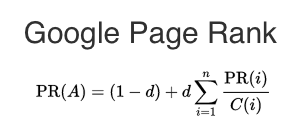
PageRank works in a very similar way, but applied to the web world. The value of a web page – let’s call it X – is determined through the links that are given to it by a website Y, taking into account, in addition, other factors such as the quality and importance of the website that gives the link. Therefore, having many links did not mean having a PageRank of 10, but their quality was also a more than important factor in the calculation of how influential a portal or its different pages were.
Although initially called Backrub, it was later renamed PageRank in honor of Larry Page, one of the co-founders of Google.
PageRank as of today
Today PageRank is no longer configured as an up-to-date metric that provides valuable data about a portal’s SEO, but it enjoyed spectacular relevance for more than a decade. Its creation strongly impacted the way webmasters and SEO consultants approached the popularity of a website, fueling their obsession with getting as many links as possible by all means to manipulate PageRank. Basically, it was the kick-start that led to the development of malicious techniques such as mass link spamming, which in turn spurred the creation of the rel=”nofollow” link attribute, in addition to many other changes in Google’s own algorithm, such as the implementation of Google Penguin in 2012 and its successive updates to fight against the black hat SEO.
Measuring the PageRank of a URL or a domain
Although it is an indicator that stopped being updated for the public in 2013 (but continues to be updated internally for Google), and was officially removed in March 2016 from Google Toolbar.
Links of interest:
- Information about TIC, the metric equivalent to the PageRank of the Russian search engine Yandex.
References:
- The end of Google PageRank in Search Engine Land (in English)
- What is Google PageRank in Search Engine Land (in English)
- Original patent of the PageRank algorithm